
Every summer, California residents and business owners brace for the inevitable: scorching temperatures that push triple digits across the Inland Empire, the Central Valley, and beyond. But beyond the personal discomfort, those extreme heat events create a silent, serious problem happening inside your walls, your breaker panel, and your appliances.
Your electrical system takes a beating during a heat wave, and understanding why can help you protect your property before the damage is done.
Why Extreme Heat and Your Electrical System Are a Dangerous Combination
Heat and electricity have never been a friendly pairing. Heat waves strain the electric grid because homes and businesses crank up their air conditioners, putting immense pressure on system operators to meet the surge in demand. But that pressure does not stop at the utility level. It travels right through your service panel and into every circuit in your building.
Large swaths of California are projected to endure more than four months every year in which the temperature will be high enough to compromise power transformers. That is not a distant future scenario. It is the direction California is already heading. Transformers and other utility grid infrastructure components required to transmit electricity through power lines over long distances perform significantly worse in the heat. When the infrastructure feeding your property is already under stress, any weakness in your own electrical system gets exposed fast.
For both homeowners and business operators, this is the moment when deferred maintenance, aging wiring, and undersized panels start showing their true cost.
What Happens Inside Your Panel When Temperatures Spike
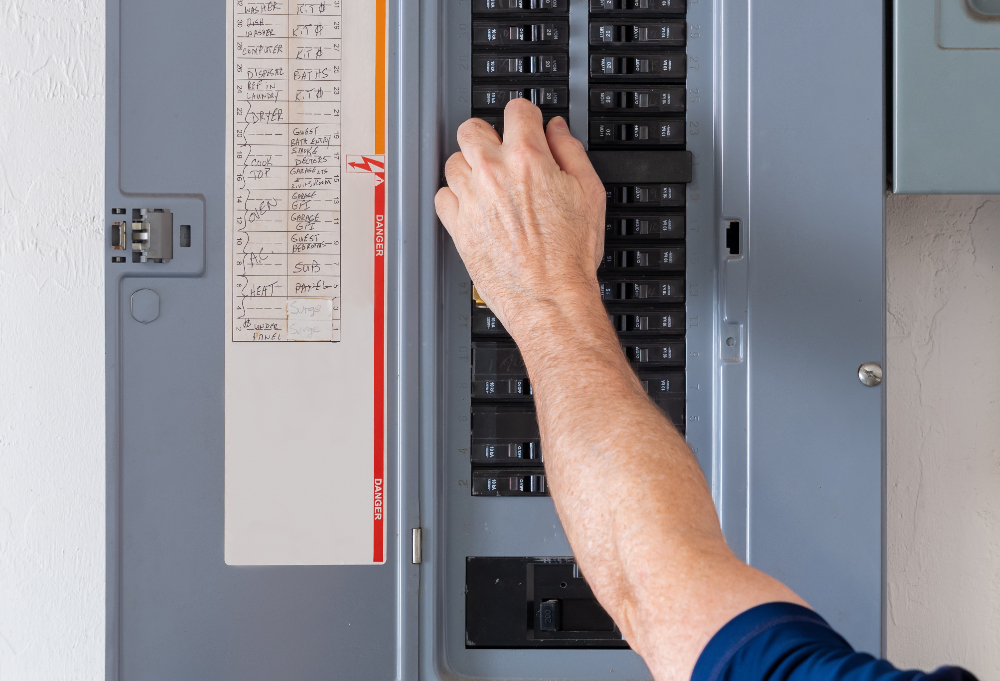
Your breaker box is designed to handle a specific electrical load. During a heat wave, that capacity gets tested in ways it simply is not built to sustain for days on end. When the temperature outside rises, it can cause a higher ambient temperature inside your panel box. Your circuit breaker’s metal strip will heat up faster, which can affect the breaker’s ability to operate. Circuit breakers will have a lower electrical load tolerance during hotter temperatures. This means the same 20-amp breaker may trip when only 18 amps of power are traveling through the line.
That is not a malfunction. That is actually the safety system doing its job. But repeated tripping under high heat conditions points to an electrical system that is operating at or beyond its design limits. Loose connections inside the breaker panel cause electrical resistance, generating heat. Over time, wires can loosen due to natural vibrations and temperature fluctuations. When you layer extreme summer heat on top of those existing vulnerabilities, you dramatically increase the risk of a more serious electrical failure.
For older homes and commercial buildings throughout Southern California, this is a pressing concern. Many structures were built decades before modern electrical loads became standard, and their panels were never designed to handle the demands of multiple air conditioning units, refrigeration equipment, and constant high-draw appliances running simultaneously.
How Air Conditioning Pushes Your Circuits to the Limit
Air conditioning is the central villain in the heat wave electrical story. The circuit breaker in your electrical panel acts as a safety switch for your HVAC system, protecting it from power surges or electrical issues that could cause damage or even fires. If the system detects an overload, it trips to cut off power.
The problem is that heat waves force your AC to run far longer and harder than it was designed for. On hot days, it is common to let the AC run longer to stay cool. But if your system is running constantly without any breaks, it could overheat, which forces the breaker to trip to prevent permanent damage. Over the course of a multi-day heat event, this cycle of overloading and tripping accelerates wear on both the HVAC equipment and the electrical system supporting it.
Clogged filters reduce airflow, while dirty coils cannot release heat effectively. The unit then pulls more power to make up for the strain, which often trips the breaker. This is why residential electrical services and commercial electrical services that include seasonal inspections are so valuable. Catching these issues before peak season means your system is not starting the summer already at a disadvantage.
For commercial properties in particular, the stakes are higher. A business running multiple HVAC zones, refrigeration units, commercial kitchen equipment, and lighting simultaneously is placing enormous, continuous demand on its electrical system throughout every heat wave. Without properly sized circuits and regular evaluation of the commercial electrical services infrastructure, the risk of failure, lost inventory, or operational downtime is real.
Warning Signs Your Electrical System Is Struggling
Knowing what to look for can be the difference between a quick repair and a serious emergency. Hot weather can cause clear signs of breaker problems. If your breaker trips often during summer, it means your system is overloaded. A burning smell near the panel shows overheating or damaged parts. Buzzing sounds from the panel might mean serious internal issues. Rust, discoloration, or damage on the breaker box are signs it needs fixing. Outlets or breakers that feel hot suggest too much electricity or loose wires.
None of these warning signs should be ignored or reset without investigation. Repeatedly resetting a tripped breaker without identifying the underlying cause is one of the most common mistakes property owners make. The breaker is tripping for a reason, and that reason does not go away just because the power comes back on.
If your electric panel sits in an area exposed to sunlight, thermal energy could be heating up the air inside the breaker box, causing the air within to be much warmer than the air outside. This could also impact the bimetallic strip and cause circuit breaker tripping. For garages, utility rooms, and exterior panels common in Southern California buildings, this is a frequently overlooked factor.
A licensed electrician providing residential electrical services can assess whether your panel location, age, and capacity are suited for the demands of California summers, and make targeted recommendations before a small issue becomes a dangerous one.
How to Protect Your Home or Business Before the Next Heat Wave
Preparation is the most cost-effective strategy when it comes to protecting your electrical system from heat-related damage. The good news is that targeted upgrades and professional evaluations can make a meaningful difference.
Start with a panel inspection. If your home or commercial building has an older panel, a licensed electrician can determine whether it has the capacity to handle summer loads without risk. Upgrading to a larger panel or adding dedicated circuits for high-demand equipment is a straightforward solution that pays dividends every summer.
As temperatures rise, the strain on energy infrastructure escalates, creating vulnerabilities for the efficiency of energy generation, grid transmission, and home cooling, which have significant impacts on businesses, households, and critical services. Investing in whole-home or whole-building surge protection is another smart layer of defense, especially as grid stress during heat waves increases the likelihood of voltage fluctuations reaching your property.
For businesses, working with a provider of commercial electrical services to conduct a load analysis ensures your system is properly matched to your operational demands. An undersized or aging commercial electrical system does not just risk equipment damage; it risks your ability to serve customers, protect inventory, and keep employees safe.
Programs like Power Saver Rewards and public awareness of peak demand hours have helped reduce strain on the system, reducing the need for Flex Alerts in recent years. Participating in those programs is good civic practice, but it does not substitute for having an electrical system that is genuinely prepared for the conditions California delivers every summer.
Stay Ahead of the Heat
California heat waves are not going away. If anything, they are becoming longer, more frequent, and more intense. Your electrical system cannot be an afterthought when temperatures climb toward triple digits across Moreno Valley and the wider Inland Empire region. Whether you own a home or manage a commercial property, now is the time to have a licensed electrician evaluate your panel, your wiring, and your HVAC circuits before summer puts everything to the test. A proactive investment in your electrical system today is always less expensive than an emergency repair in the middle of a heat wave.
Need Electrical Panel Replacement & Electrical Services Near You?
At Pi Electric and Solar, we’re passionate about helping you power your home or business with reliable, sustainable energy solutions. Whether you’re ready to modernize your electrical systems, explore smart home options, or make the switch to solar, our expert team is here to guide you every step of the way. Let’s work together to create a seamless, energy-efficient transformation tailored to your needs—reach out to us today and discover how we can make your vision a reality!